Infinite Marquee
RESEARCH USE ONLY JOIN OUR CLUB GET 10% OFF BUILD YOUR OWN KIT RESEARCH USE ONLY JOIN OUR CLUB GET 10% OFF BUILD YOUR OWN KIT

Evidence-Based Information

Explains how BioPeak USA sources BioPeak USA Blog materials. This blog is for researchers and laboratory scientists who prioritize accuracy and truth in their work. It doesn’t matter if you perform cell studies or if you validate your results with HPLC-tested compounds, our blog analyzes the same needs your laboratories might have. BioPeak USA cites scientific literature to support each and every article. They give the same analytical attention to their products, which include GMP laboratory supplies and Certificates of Analyses, as they do to the articles which compose their blog. BioPeak USA takes great pride in the absence of unnecessary information and filler in their blogs.

100+
Research Compounds

Premium quality products

100%
PURE & AUTHENTIC

Third-party tested

certificate-check

GMP
CERTIFIED FACILITY

High manufacturing standards

10,000+
HAPPY CUSTOMERS

Worldwide trust

Laboratory vial and pipette for peptide risk assessment

Peptide Risks: What the Evidence Shows and How Labs Can Reduce Them

Peptide Risks: Safety Considerations, Information and How to Reduce Risk This article summarizes publicly available medical information. It outlines the evidence for human safety but does not show that any research material is safe for humans. Peptide risk changes with the type of peptide involved. Some peptides rank among the most studied medications in modern medicine.
Read More »
Laboratory researcher reviewing peptides benefits data beside a microscope and clinical study notes

Peptides Benefits Explained: What the Evidence Really Shows

Understanding the Peptides Benefits BioPeak USA Editorial Team Peptides are short chains of amino acids that carry out many jobs inside the body. Interest in peptides benefits has grown quickly, so online claims now outnumber careful studies. Some claims rest on solid clinical research. Others begin with lab work in cells or animals and still need testing in people.

Read More »
Are Peptides Safe? – BioPeak USA guide to peptide safety

Are Peptides Safe for Human Use? A Science-Based Guide

Additionally, There is no single answer for every peptide. This is because peptides are a broad class of molecules, and their safety depends on the exact substance, its intended purpose, product quality, available human evidence and regulatory status. Regulators authorise some peptide-based medicines for specific medical uses after reviewing the evidence.

Read More »
Laboratory vials of lyophilized research peptides beside analytical HPLC equipment and testing logs

Where to Buy Research Peptides?

Where to Buy Research Peptides? When you look to obtain research peptides, the source matters as much as the product. First, buyers should use proper channels and the right verification processes. Institutional buying therefore requires verification, documentation, traceability and analytical data. As a result, this guide explains how research organisations check that their suppliers are genuine, well documented, high quality and compliant with regulations.

Read More »
Peptides vs small molecules 1100px

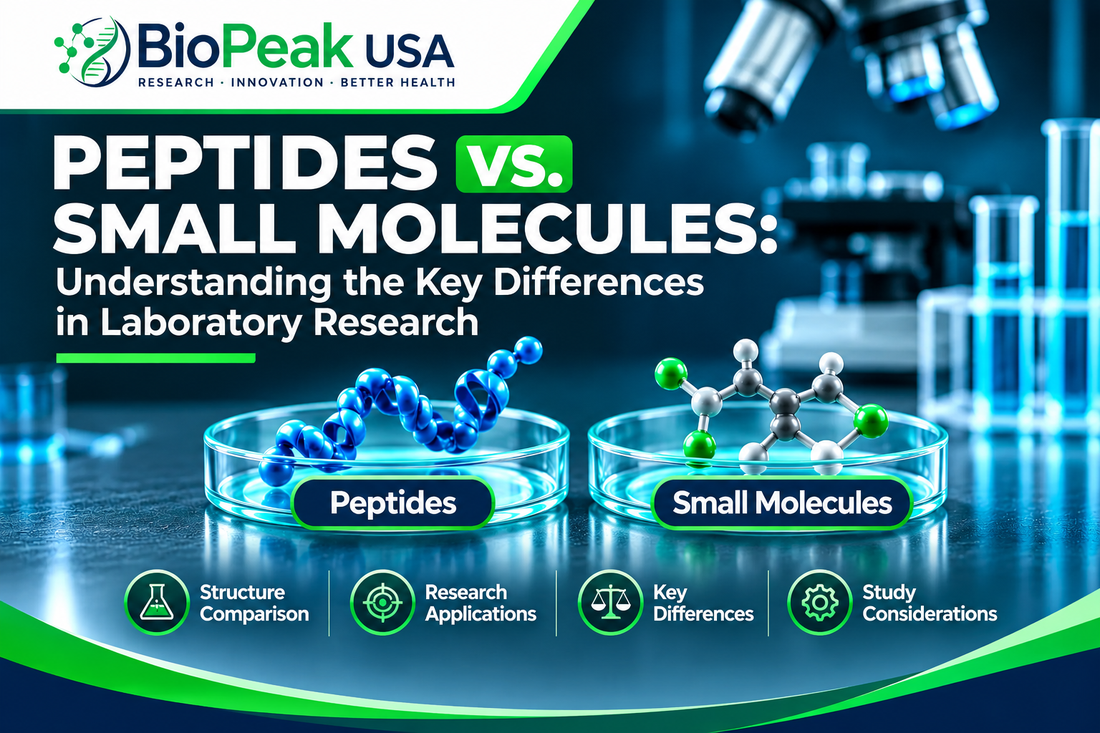
Peptides vs. Small Molecules: Understanding the Key Differences in Laboratory Research

Small Molecules in Laboratory Research Choosing between peptides vs. small molecules is one of the first decisions an in vitro study requires. Researchers often make that choice before the target is fully defined. The two classes differ in size, structure, synthesis route, binding behavior and analytical verification. Therefore, treating them as interchangeable can lead to assay troubleshooting that careful planning would have prevented.

Read More »
BioPeak USA research peptides and synthetic reference compounds for in vitro study

The Complete Guide to Research Peptides and Synthetic Reference Compounds for In Vitro Study

Verifying Research Peptides and Synthetic Reference Compounds A vial labeled “99% pure” still leaves a researcher with questions. What does that figure cover, which method produced it, and does it describe the lot in front of you? For in vitro work, those answers matter more than the product name. Research peptides and synthetic reference compounds give dependable results only when their identity, purity and lot records have been verified.

Read More »
Research peptides and compounds in a laboratory with HPLC testing and COA documentation

Research Peptides & Compounds Guide to Purity, Testing and Sourcing

Quick Overview: What Researchers Need to Know About Research Peptides & Compounds Research peptides & compounds are laboratory materials that scientists use in assay development, analytical method development and in vitro studies. They include synthetic peptides, reference standards, reagents and multi-component research formulations. However, a product name or price says little about what a vial actually contains.

Read More »
The complete guide to research peptides featuring BioPeak USA branding and a research vial

The Complete Research Peptides Guide

Research peptides are studied for their molecular structure, purity, stability, and potential biological activity. This guide explains peptide testing, COA reports, HPLC analysis, quality standards, and key considerations for laboratory research.

Read More »
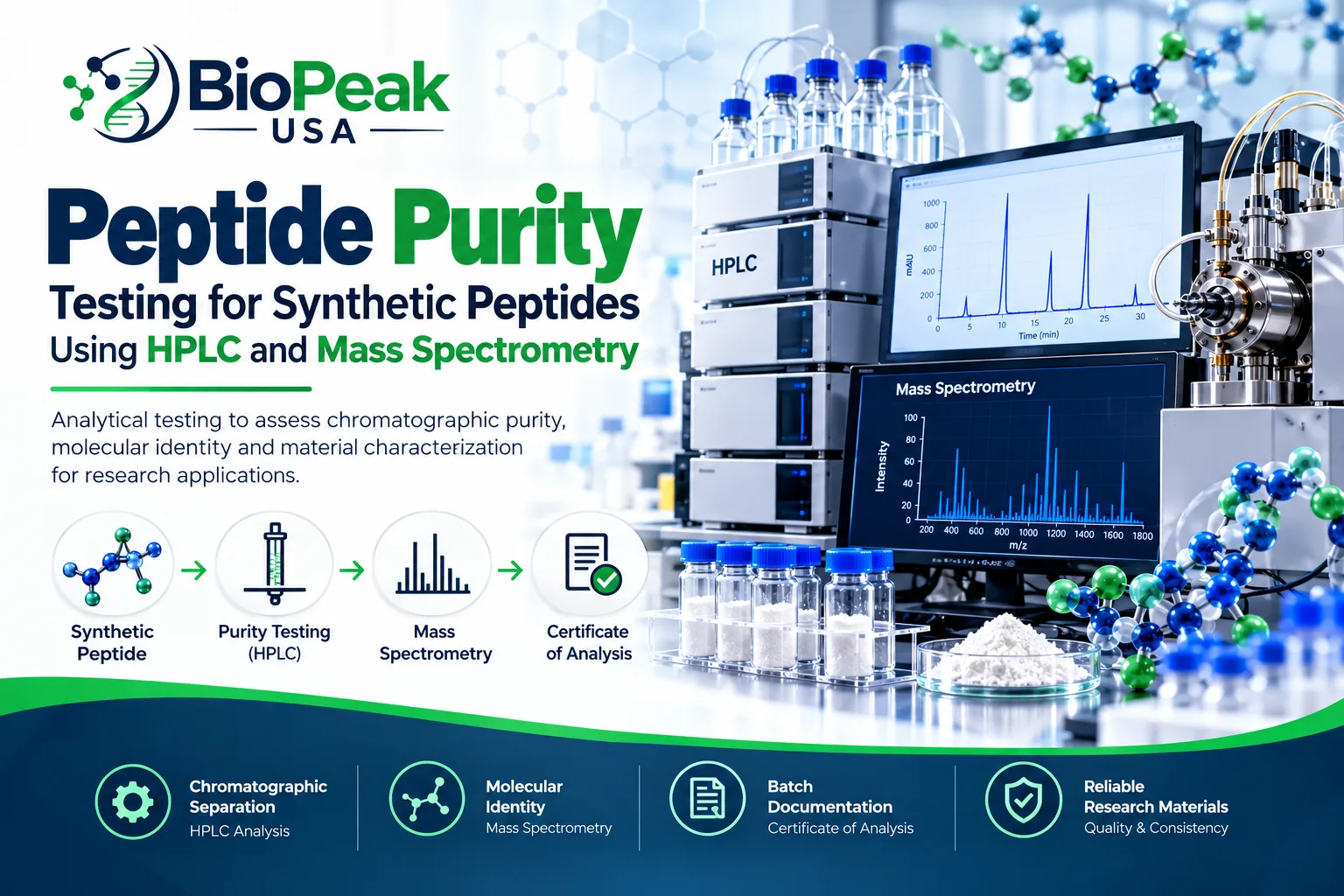
Peptide Purity testing using HPLC and mass spectrometry by BioPeak USA

Peptide Purity Analysis Using HPLC and Mass Spectrometry

Peptide Purity Testing Using HPLC and Mass Spectrometry Most people glance at the purity number on a peptide CoA, see something in the high 90s, and move on. But that number has a backstory, and it’s worth knowing. It came from a specific instrument running a specific method on one particular batch.

Read More »