Explore synthetic peptide synthesis from amino acid sequencing and purification to HPLC and mass spectrometry characterization, libraries, and research documentation.
How Synthetic Peptide Synthesis Works
A synthetic peptide is produced through the laboratory synthesis of amino acids in a sequential order. Early research relied on isolating peptides from biological sources, which offered limited control and reproducibility. Advances in analytical and synthetic chemistry now give researchers much greater control over peptide synthesis and characterization. Synthetic peptides have a well documented record in biomedical research. This document explains the methods of peptide synthesis, including peptide bond formation, chain elongation, purification, and structure elucidation.
The references in this manual are intended for Research Use Only (RUO) and controlled, in vitro research settings.
Peptides are chains of amino acids, and they occur naturally within proteins. Scientists also build peptides in the laboratory, and these are called synthetic peptides. Chemists define each sequence precisely, then purify and analyze the product before any research use.
Synthetic peptides give researchers direct control over their experiments. Because the sequence is known, a synthetic peptide also serves as a reference standard for comparing and evaluating other research results.
Synthetic Peptide Synthesis
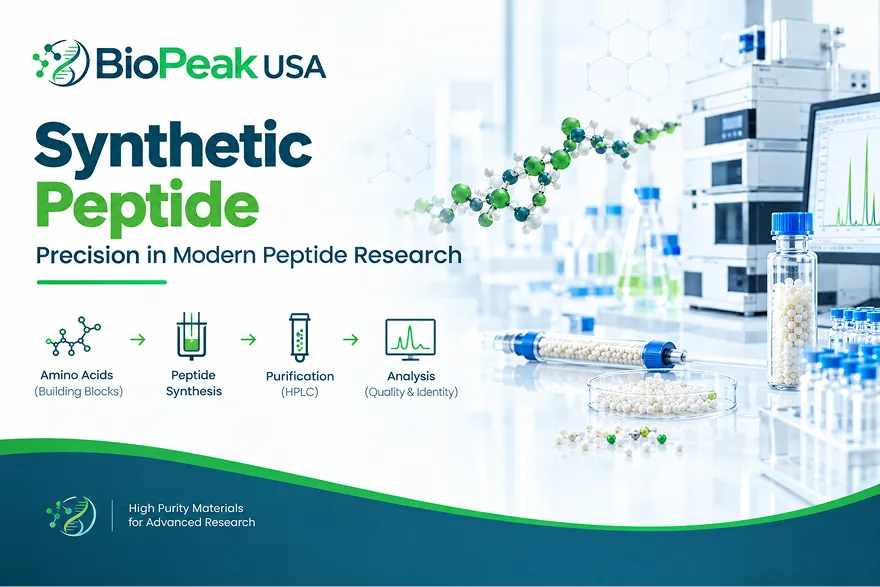
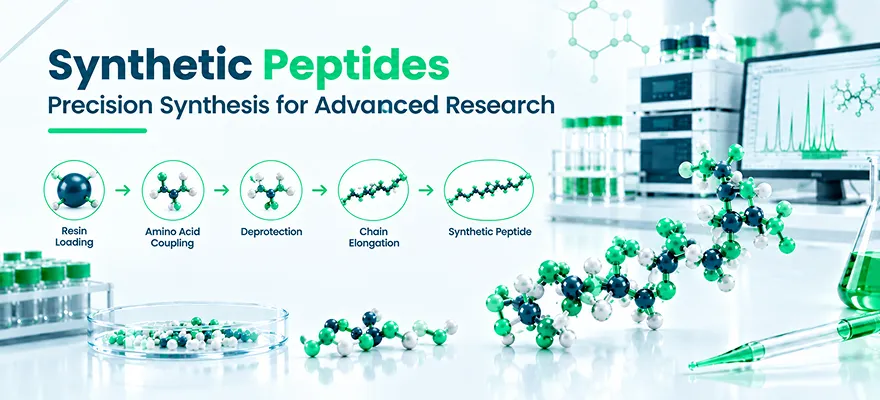
Peptide synthesis centers on forming a peptide bond between amino acids. Most laboratories rely on solid-phase synthesis, the most common approach. In this method, a growing peptide chain stays anchored to an insoluble support. When the chain reaches its full length, chemists separate the peptide from the support.
As a chain grows longer, controlling its exact sequence becomes harder. For this reason, most chemical syntheses remain limited in chain length. Therefore, research-grade materials usually favor short chains over full-length proteins. This section covers custom synthesis and sequence control for those shorter syntheses.
Synthetic Peptide Purification
Peptide synthesis produces a mixture. It contains the target peptide along with fragments and leftover reagents. Purification removes these impurities, so the final material reflects the intended sequence.
Several purification methods exist. Reverse-phase chromatography separates components according to their hydrophobicity. This principle underlies both analytical and preparative HPLC. As a result, reversed-phase chromatography serves as a core tool for purifying and analyzing synthetic peptides.
Synthetic Peptide Characterization
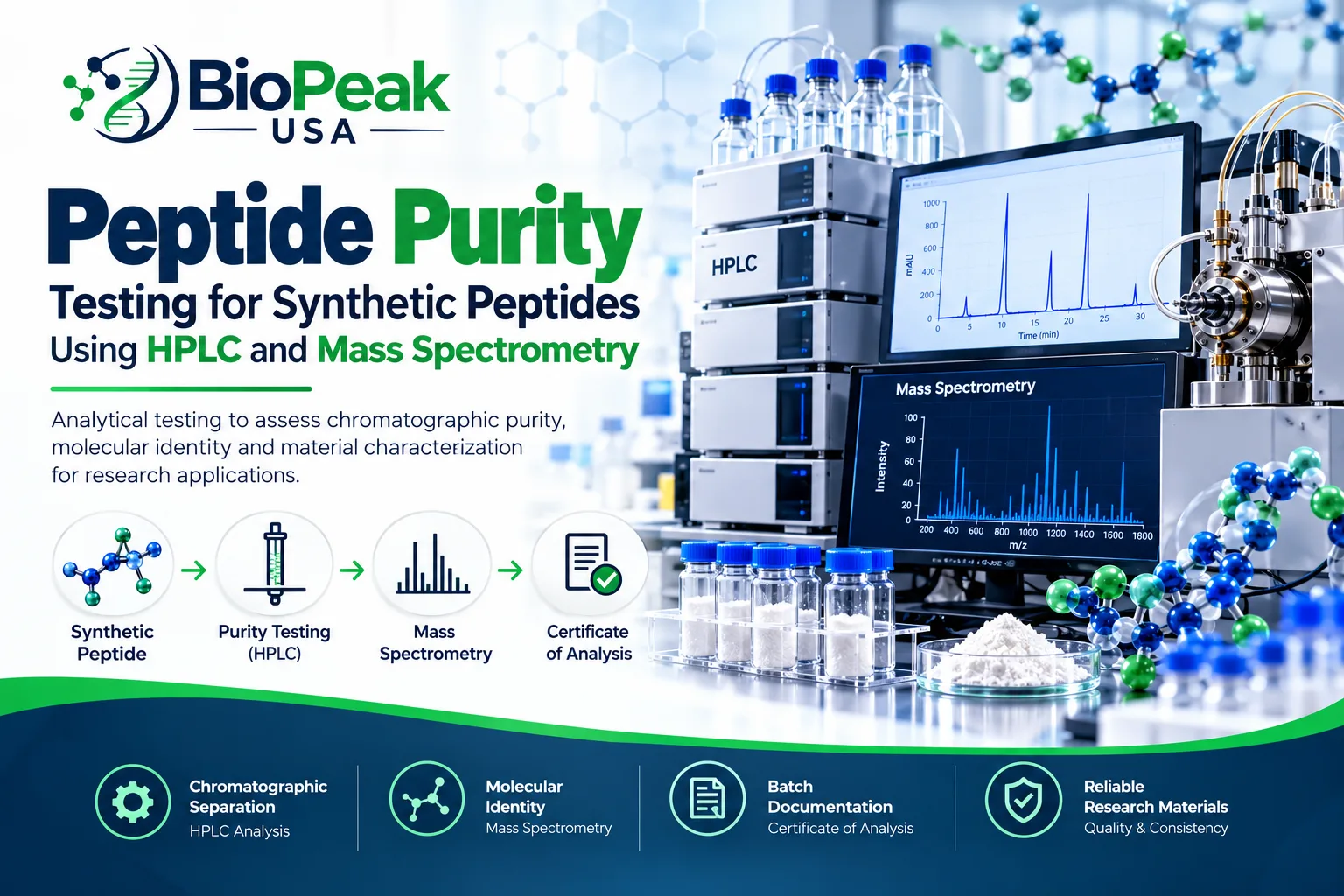
After synthesis, analysts test the molecular weight and purity of the peptide. Both tests rely on chromatography. To measure purity, analysts first separate the target peptide from all other peptides and compounds. This step establishes chromatographic purity. Next, mass spectrometry determines the molecular weight of the separated peptide.
HPLC and mass spectrometry work together to confirm both purity and molecular identity during synthetic peptide characterization.
Amino acid analysis adds further confirmation of composition for reference standard materials. Together, these methods generate the batch-specific data that appears on every Certificate of Analysis.
Synthetic Peptide Libraries
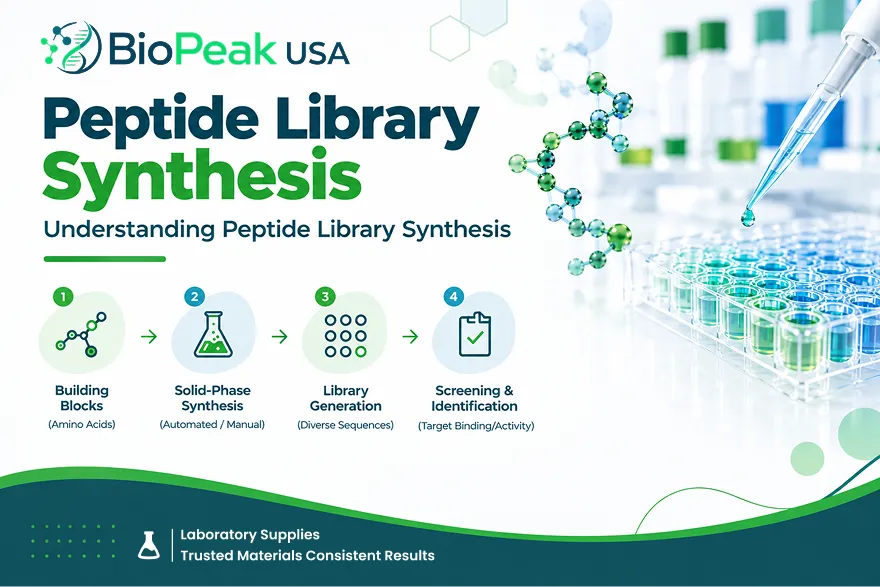
A peptide library contains many sequence variants, synthesized together in a single construct. Researchers use libraries to test a large number of variants in one experiment. By varying the sequence systematically, they can identify which variants produce a positive response in an assay.
Screening methods such as phage display follow a similar principle. In these methods, peptides appear on the surface of a phage particle. Researchers then select and isolate the peptides that bind a chosen target.
Why Documentation Matters in This Field
Reproducibility depends on more than one successful experiment. Researchers must know that the material in one study matches the material used in any attempt to repeat it. For this reason, batch-specific analysis and formal documentation matter when working with research-grade materials.
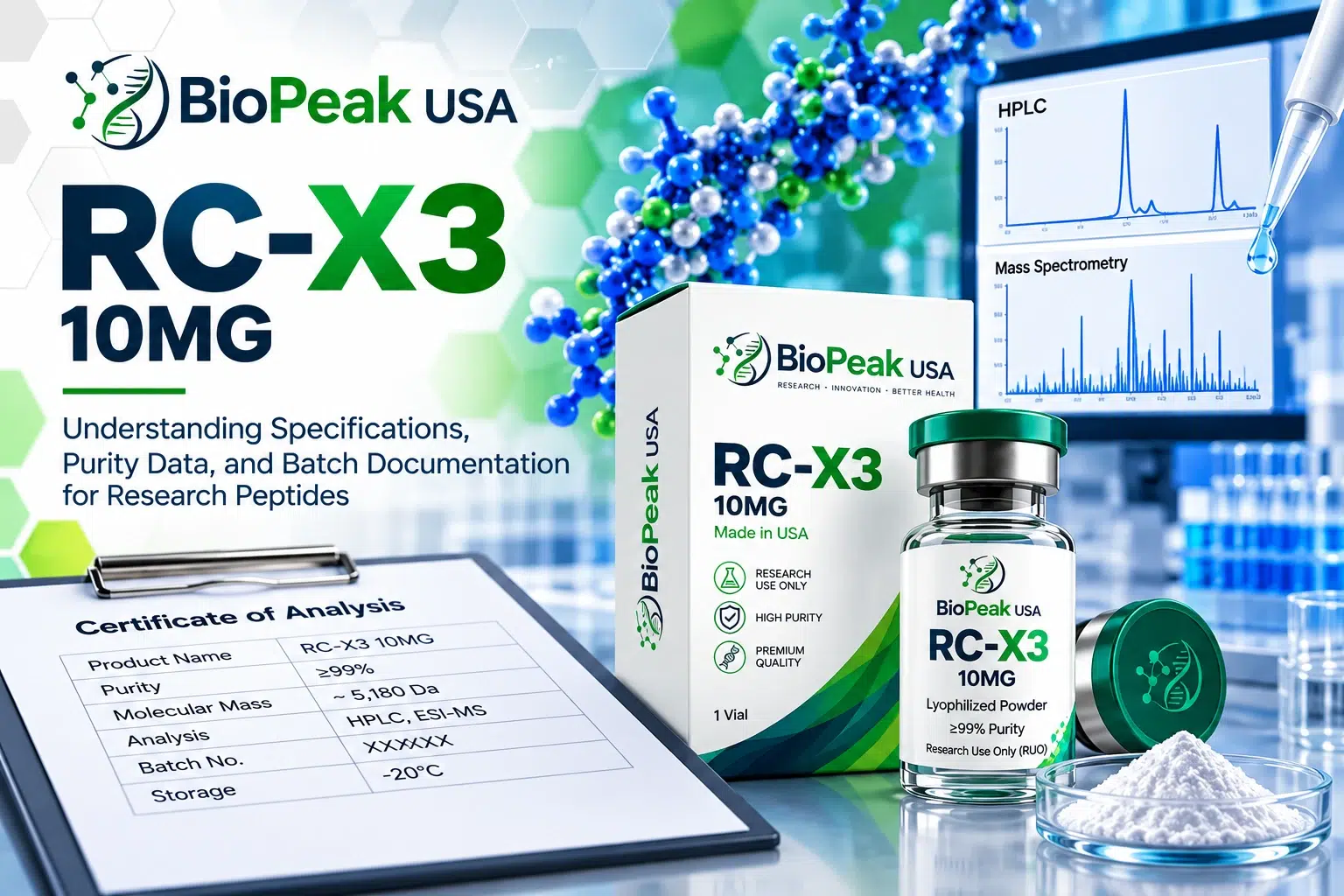
A Certificate of Analysis typically records the batch number, purity results, identity confirmation, and storage conditions. BioPeak USA includes batch-specific data with each research product, so teams can verify what they are working with.
Frequently Asked Questions
What is a synthetic peptide?
It is a peptide built through controlled chemical synthesis. Chemists join amino acids in a defined sequence, rather than isolating the molecule from a biological source.
How is a synthetic peptide made?
Most chemists use solid-phase peptide synthesis. They couple residues one at a time to a growing chain, then cleave and purify the material once the sequence is complete.
Why is purification needed after synthesis?
The crude product contains the target sequence mixed with synthesis byproducts. Purification, typically by reverse-phase chromatography, isolates the intended molecule before characterization begins.
How is purity confirmed?
HPLC is the most common tool for assessing peptide purity. Mass spectrometry then evaluates molecular identity against the intended sequence.
What documentation should accompany this material?
A batch-specific Certificate of Analysis should come with any research-grade material. It documents identity, purity, batch number, and storage conditions.
Conclusion
Synthetic peptide research follows a clear path from design to documentation. First, residues join into a defined sequence through synthesis. Then, purification removes byproducts. Finally, characterization confirms purity and identity before the material enters a laboratory workflow.
For research-grade products with batch-specific analytical documentation, researchers can explore BioPeak USA’s Molecular Science category.
Table of References
Resource
Publisher
Use in This Article
Link
PubChem
NCBI / NIH
Chemical, structural, and identification details for amino acids and peptides.
Research Only
This article discusses all synthetic peptides strictly within laboratory and scientific research. Each one is classified as Research Use Only (RUO). These materials are not medicinal products and are not intended for human or veterinary use, clinical administration, or therapeutic application. Qualified laboratory personnel should handle them according to institutional policies, laboratory procedures, and applicable regulations.
 As a chain grows longer, controlling its exact sequence becomes harder. For this reason, most chemical syntheses remain limited in chain length. Therefore, research-grade materials usually favor short chains over full-length proteins. This section covers custom synthesis and sequence control for those shorter syntheses.