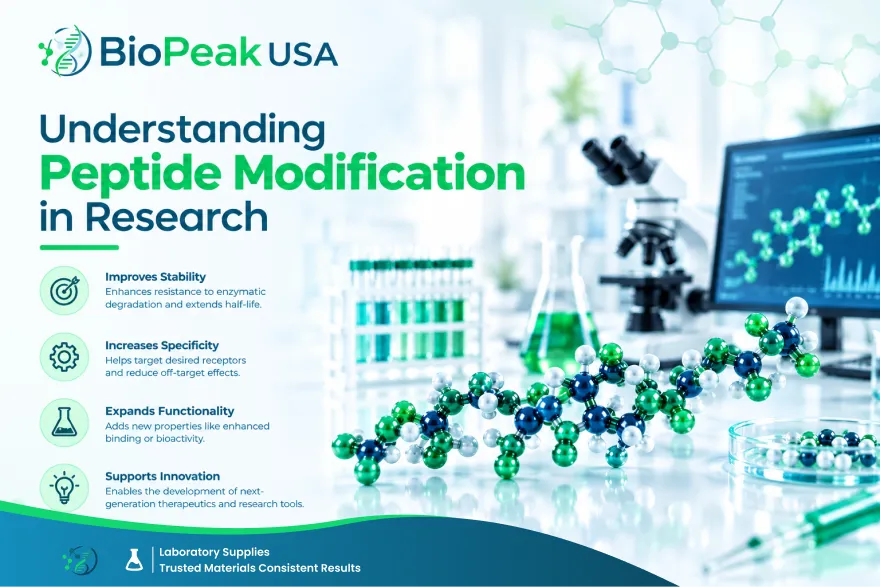
A guide to peptide synthesis, covering solid-phase and solution-phase methods, reagents, purification, characterization, and custom manufacturing for laboratory research.
What Is Peptide Synthesis and Why Does It Matter?
Peptide synthesis is the controlled laboratory process of assembling amino acid residues into a defined sequence to produce a synthetic peptide. Researchers use this process across molecular biology, biochemistry, and analytical research whenever they need a precisely defined molecular structure. Unlike peptides isolated from biological sources, synthetic peptides allow researchers to build an exact, specified sequence. Researchers can also verify these materials through analytical methods such as chromatography and mass spectrometry.
Modern synthesis techniques give researchers greater control over sequence design, chain assembly, purification, and characterization. Depending on the sequence, scale, and research goals, researchers may use a solid-phase or solution-phase approach. This guide explains the main synthesis methods, the reagents involved, how researchers purify and characterize peptides, what custom synthesis involves, and how peptide libraries support laboratory research.
The information in this guide is intended for Research Use Only (RUO) in controlled, in-vitro research settings.
Peptide synthesis involves joining amino acid residues one at a time in a defined sequence to build a peptide. Each amino acid contains reactive functional groups. Researchers control these groups during each stage so the intended peptide bond forms at the correct point in the chain instead of reacting with another site.
Several chemical approaches can support this process, and solid-phase peptide synthesis remains one of the most widely used. In this method, the growing chain stays attached to a solid support while researchers add amino acids one after another. Once the sequence reaches completion, researchers cleave the finished peptide from the support, purify the material, and characterize it. This workflow gives researchers a material with a documented sequence, identity, and analytical profile.
How Peptide Synthesis Works
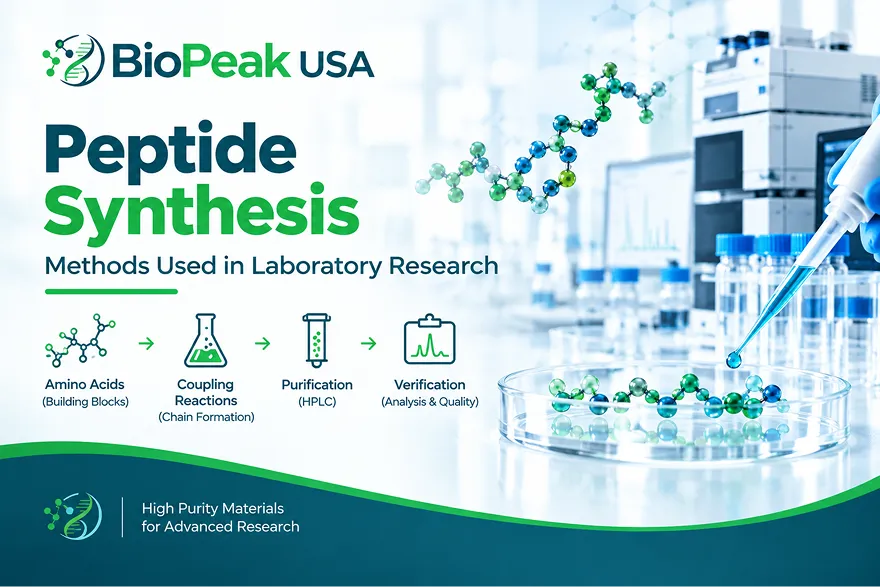
At its core, peptide synthesis involves repeated formation of peptide bonds between amino acid residues. Researchers extend the chain one residue at a time until the target sequence reaches completion.
From individual amino acids to a structured peptide chain through peptide synthesis.
First, researchers attach the initial amino acid to a support or hold it in solution, depending on the selected method. Next, they protect its reactive groups to prevent unwanted side reactions. Researchers then introduce and couple the next amino acid to the chain. This deprotection-and-coupling cycle continues until the full sequence reaches completion.
Solid-Phase Peptide Synthesis
Solid-phase peptide synthesis, usually called SPPS, anchors the growing chain to an insoluble resin and extends it through repeated deprotection and coupling cycles.
A typical SPPS run begins when researchers attach the first residue to the resin. They then remove a temporary protecting group, couple the next amino acid, and repeat the cycle until they complete the sequence. Finally, researchers cleave the completed peptide from the resin and move the material into purification.
Most modern SPPS workflows use FMOC-based protection chemistry. This approach keeps functional groups that should not react during a particular coupling step protected until the appropriate stage. Therefore, the efficiency of each coupling cycle, the completeness of deprotection, and the selected cleavage conditions can all affect the final analytical profile. This effect becomes more important as researchers work with longer and more structurally complex sequences.
Solution-Phase Peptide Synthesis
Solution-phase synthesis forms peptide bonds without anchoring the chain to a solid support. Instead, researchers couple protected amino acids or peptide fragments directly in solution.
This approach can work well for certain sequences, peptide fragments, and larger-scale production runs. However, researchers must isolate and purify the product between reaction stages, which can make long sequences more demanding. Since the process does not use a solid support to simplify separation, researchers must manage purification at each stage.
Therefore, researchers select an approach based on factors such as sequence length, structural complexity, scale, purification requirements, and the analytical specification for the final material.
Peptide Synthesis Reagents
Amino acids provide the basic building blocks for chain extension. However, peptide synthesis also requires supporting reagents. These chemicals control reactive functional groups, support peptide bond formation, remove protecting groups, and release the finished peptide from the synthesis system.
Coupling Reagents
Coupling reagents support peptide bond formation between amino acid residues. Researchers select a coupling reagent according to the synthesis strategy, target sequence, reaction conditions, and required level of control.
Protection and Deprotection Reagents
Protecting groups temporarily mask reactive functional groups so they do not interfere with the current coupling step. Researchers then use deprotection reagents to selectively remove those groups and prepare the chain for its next residue.
Cleavage Reagents
After researchers complete the chain, cleavage reagents release the finished peptide from its solid support. Depending on the selected strategy, these reagents can also remove protecting groups that remain on the molecule.
Capping and Supporting Reagents
Capping reagents help manage incomplete coupling reactions by blocking partial sequences from reacting during later cycles. In addition, solvents and other supporting reagents complete the synthesis system. Researchers select these materials according to the synthesis chemistry and the analytical standards for the final material.
Careful reagent selection, together with tight reaction control, helps researchers establish a consistent synthesis route and limit unwanted byproducts.
Peptide Purification and Characterization
A synthesis run produces more than the target peptide. The crude material can contain incomplete sequences, reaction byproducts, leftover reagents, and other impurities. Therefore, purification separates the target material from these components before researchers perform detailed analytical characterization.
Peptide Purification
Chromatographic methods separate the target peptide from related compounds in the crude mixture. Reverse-phase chromatography remains a common approach because it separates components according to differences in hydrophobicity. Depending on the material quantity and required resolution, researchers may use preparative or analytical HPLC.
HPLC Analysis
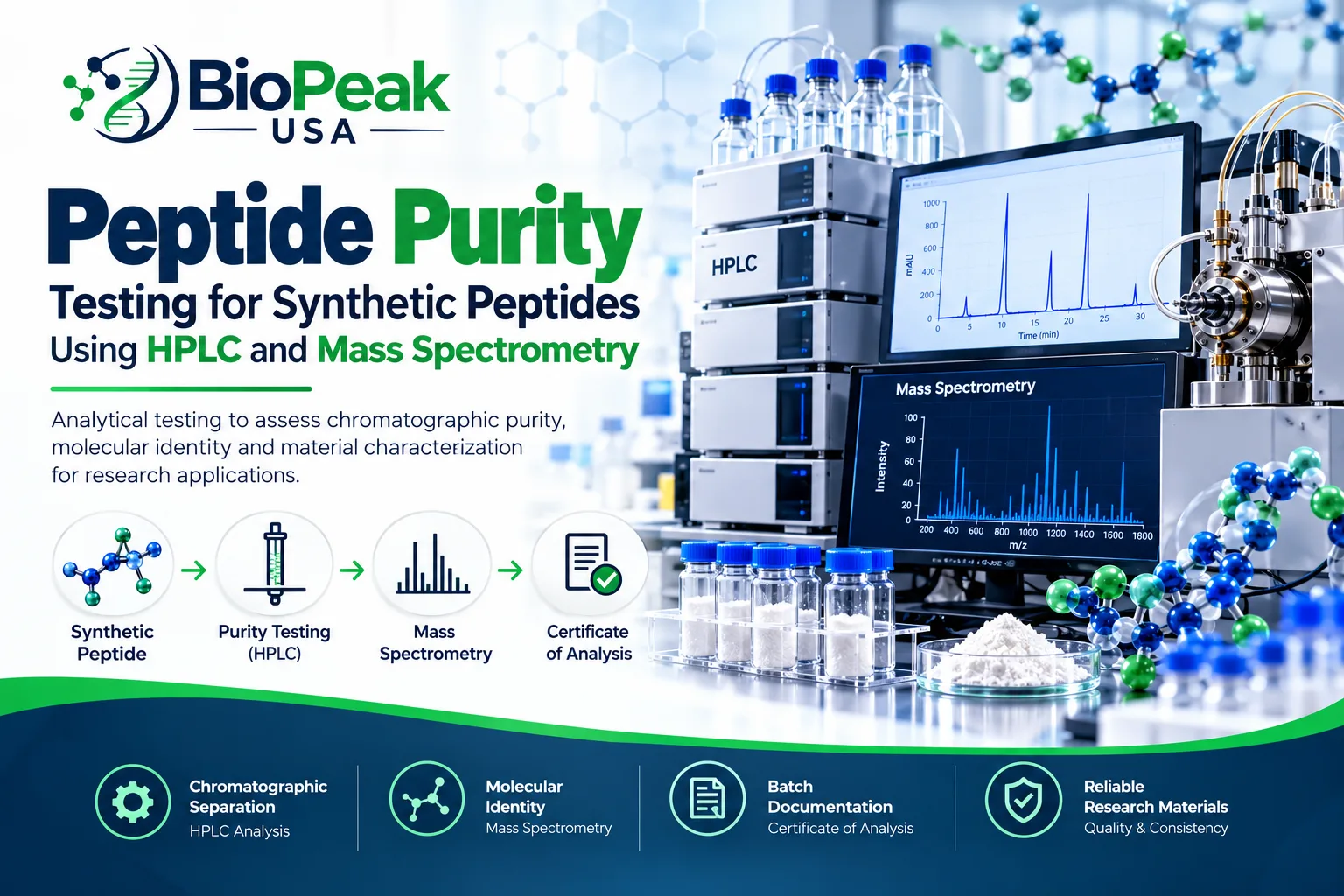
High-performance liquid chromatography, or HPLC, shows the chromatographic profile of a synthesized peptide. It separates the target material from related compounds and helps researchers assess purity and identify major components in a sample. Researchers can also include HPLC results in the analytical documentation for a specific research material and production batch.
Mass Spectrometry
Mass spectrometry provides information about molecular mass and supports identity confirmation for a synthesized peptide. When researchers pair mass spectrometry with chromatographic analysis, they gain complementary information about the material’s overall analytical profile.
Other Analytical Methods
Researchers may use additional analytical methods depending on the peptide and the specific research requirements. For example, amino acid analysis can provide further information about composition and may prove useful when researchers evaluate reference-standard materials.
Together, synthesis, purification, and characterization create a documented analytical profile that researchers can track throughout subsequent laboratory work.
Peptide Manufacturing and Custom Synthesis
Peptide manufacturing involves more than connecting amino acids. A controlled production workflow can include synthesis planning, raw-material control, chain assembly, cleavage, purification, analytical testing, and documentation. Each stage supports the next part of the process.
Custom synthesis begins with a defined research specification. This specification may include an amino acid sequence, a structural feature, or another requirement for the research material. As a result, the specification influences the synthesis strategy, purification approach, and analytical work required for the final material.
Peptide microarrays provide valuable tools for studying molecular interactions and peptide-based research.
A typical custom workflow moves through sequence definition, synthesis strategy selection, chain assembly, cleavage, purification, characterization, and preparation of analytical documentation for the finished material.
More complex sequences may require modified synthesis strategies or additional purification and characterization work. For example, sequence length, structural features, solubility, and the expected analytical profile can all affect the complexity of the process.
For research organizations that source materials from external suppliers, batch-specific documentation provides concrete information to compare with the material before researchers introduce it into a laboratory workflow.
Peptide Libraries and Special Synthesis
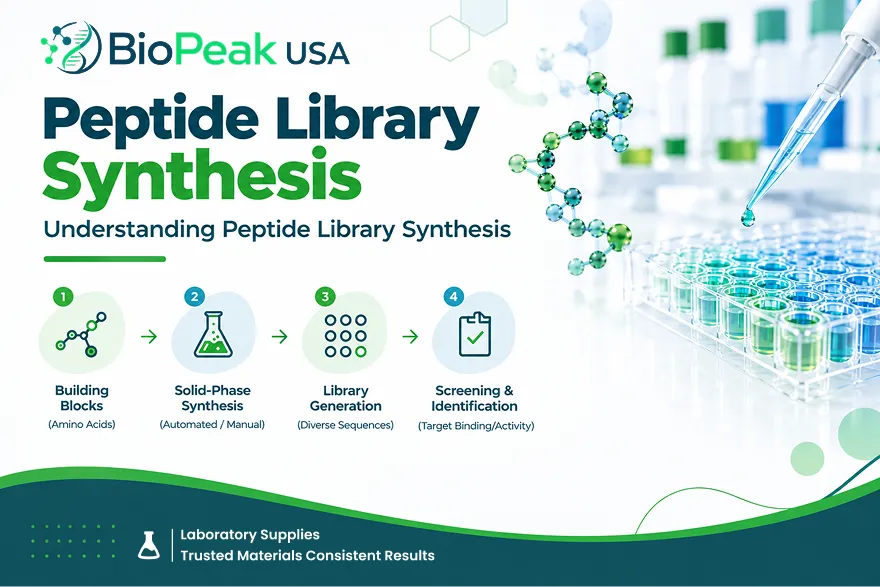
A peptide library contains a collection of related sequences that provides systematic variation within a research workflow. Instead of studying one sequence in isolation, researchers can evaluate multiple related sequences according to their study design.
These libraries can support screening and molecular recognition research because researchers can compare differences between sequences within the same experimental framework.
Beyond standard synthesis, researchers can also use specialized techniques such as peptide cyclization, conjugation, labeling, and other structural modifications. Each technique may require changes to the underlying synthesis, purification, and characterization strategy.
Therefore, researchers select a synthesis method based on more than the target sequence. The final structure, intended research use, and analytical requirements also influence the selected approach.
Peptide Synthesis in Laboratory Research
Synthetic peptides give researchers a defined molecular structure that they can characterize before using the material in an experiment. In comparison, biological sources can show natural variability. Chemically defined materials therefore provide a more controlled starting point for analytical and experimental research.
However, reproducibility depends on documentation as well as the material itself. Researchers should be able to trace a research material through its production batch, analytical results, and associated records. This information allows laboratories to verify exactly which material they used in a given experiment.
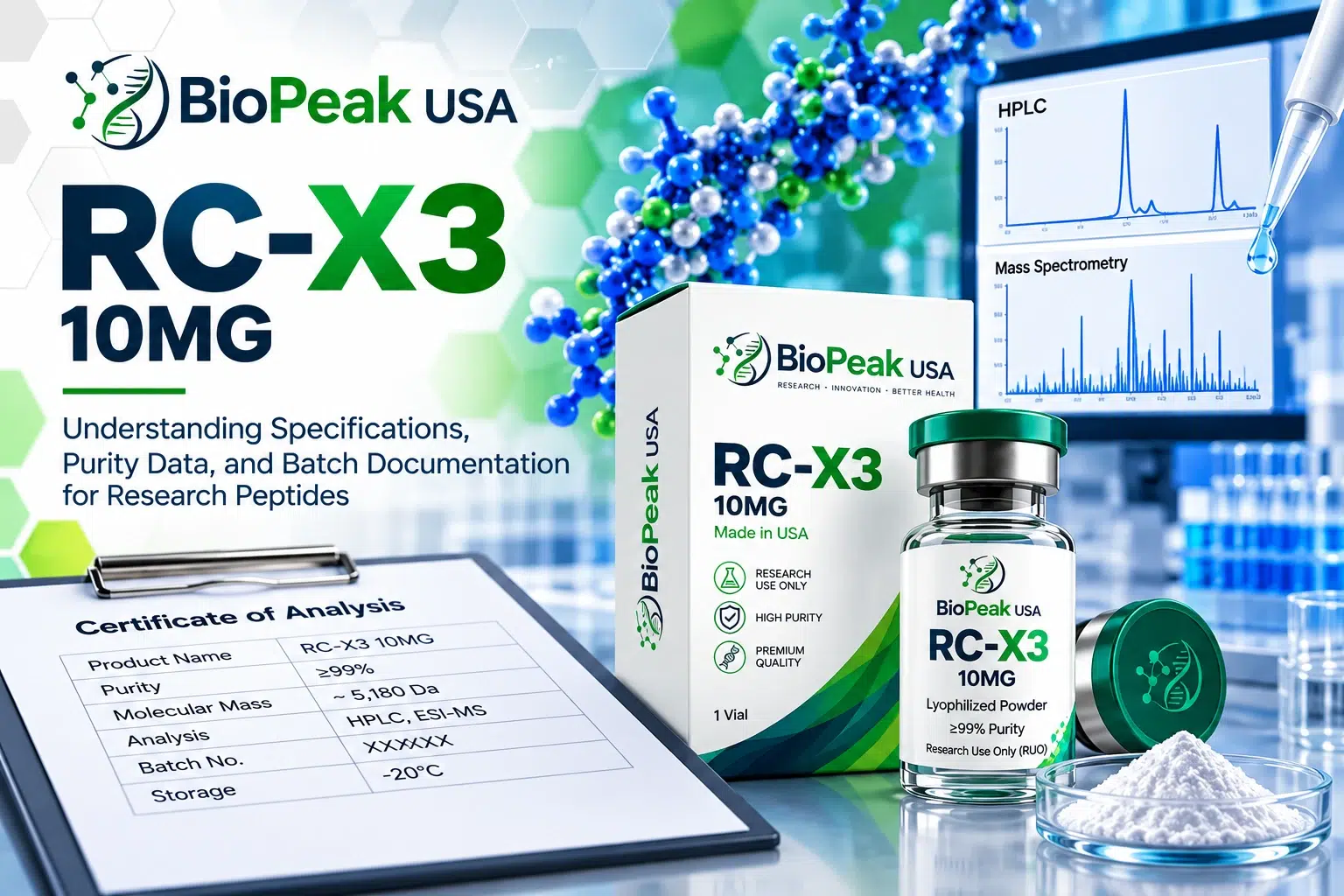
A Certificate of Analysis (CoA) records batch-specific information such as material identity, analytical results, purity data, and storage conditions. These records help laboratories maintain traceability and verify a material’s specifications before use.
BioPeak USA supplies synthetic and biochemical research materials with batch-specific analytical documentation for laboratory and in-vitro research applications.
Frequently Asked Questions
What is peptide synthesis?
Peptide synthesis is the controlled chemical assembly of amino acid residues into a defined peptide sequence. Researchers then purify and characterize the resulting material for laboratory research.
What is solid-phase peptide synthesis?
Solid-phase peptide synthesis anchors the growing peptide chain to an insoluble support and extends it through repeated cycles of amino acid coupling and deprotection.
What are the main peptide synthesis methods?
The two broad approaches are solid-phase and solution-phase synthesis. Researchers can also use specific variations and hybrid strategies for particular sequences or research requirements.
What reagents are used in peptide synthesis?
Common reagents include protected amino acids, coupling reagents, deprotection reagents, cleavage reagents, capping reagents, solvents, and other supporting chemicals selected for the synthesis strategy.
Why is purification necessary after synthesis?
Crude synthetic material typically contains incomplete sequences, related compounds, and residual reagents alongside the target peptide. Purification separates the intended peptide from these components before researchers perform characterization.
How is a synthesized peptide characterized?
HPLC evaluates chromatographic purity and separation, while mass spectrometry supports molecular identity and mass confirmation. Researchers may also use other analytical methods depending on the material.
What is custom peptide synthesis?
Custom peptide synthesis produces a peptide according to a defined research specification, such as a specific amino acid sequence or structural requirement.
Conclusion
Peptide synthesis gives researchers a controlled way to build defined molecular sequences from individual amino acid residues. Depending on the sequence and research requirements, researchers may use solid-phase, solution-phase, or specialized synthesis strategies. They can then purify and characterize the resulting material to document its analytical profile.
The complete workflow extends from synthesis planning and chain assembly through purification, characterization, and batch-specific documentation. HPLC, mass spectrometry, and other analytical methods provide important information about the identity and analytical profile of the final material.
Researchers evaluating synthetic and biochemical research materials can explore BioPeak USA’s Molecular Science category for materials supplied with batch-specific analytical documentation.
Table of References
Resource
Publisher
Use in This Article
Link
PubMed
NLM / NIH
Peer-reviewed literature covering peptide synthesis methods, solid-phase synthesis, purification, and characterization.
Research Only
All peptide synthesis materials discussed in this article are presented strictly in the context of laboratory and scientific research. The information is intended for Research Use Only (RUO) and controlled in-vitro research settings. These materials are not intended for human or veterinary use, clinical administration, or therapeutic applications. Handling and evaluation should remain limited to qualified laboratory personnel following applicable institutional policies, laboratory procedures, and regulatory requirements.