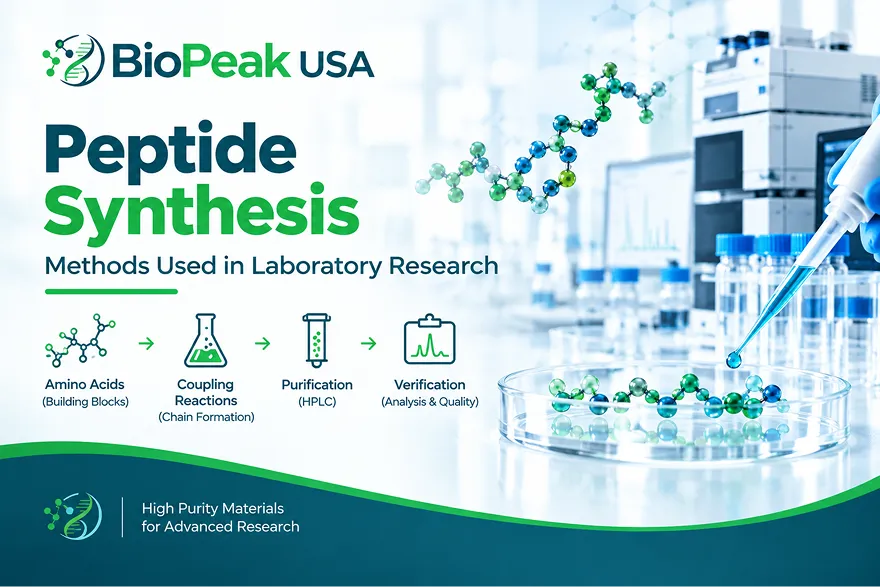
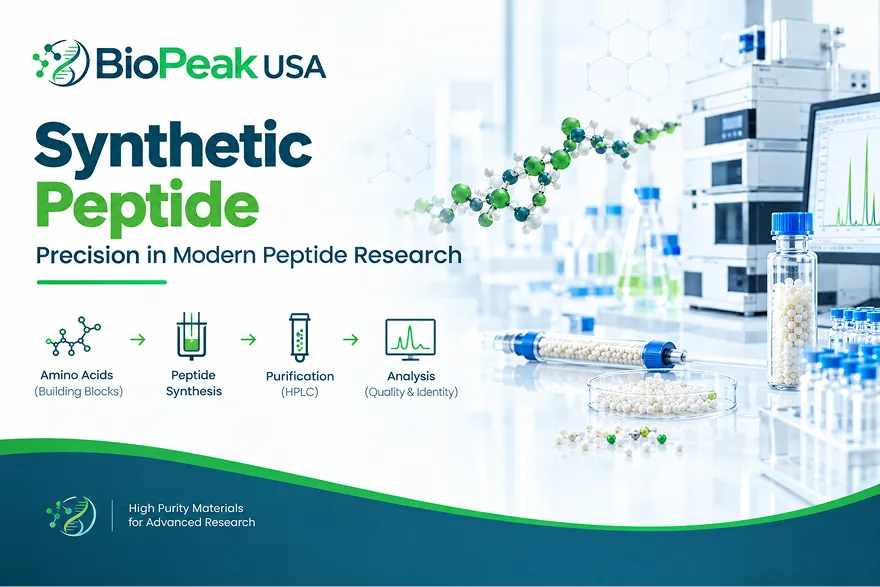
Scientific research materials support reliable lab workflows through verified purity, analytical characterization, batch traceability, stability, and complete quality documentation.
How Scientific Research Materials Support Reliable Laboratory Work
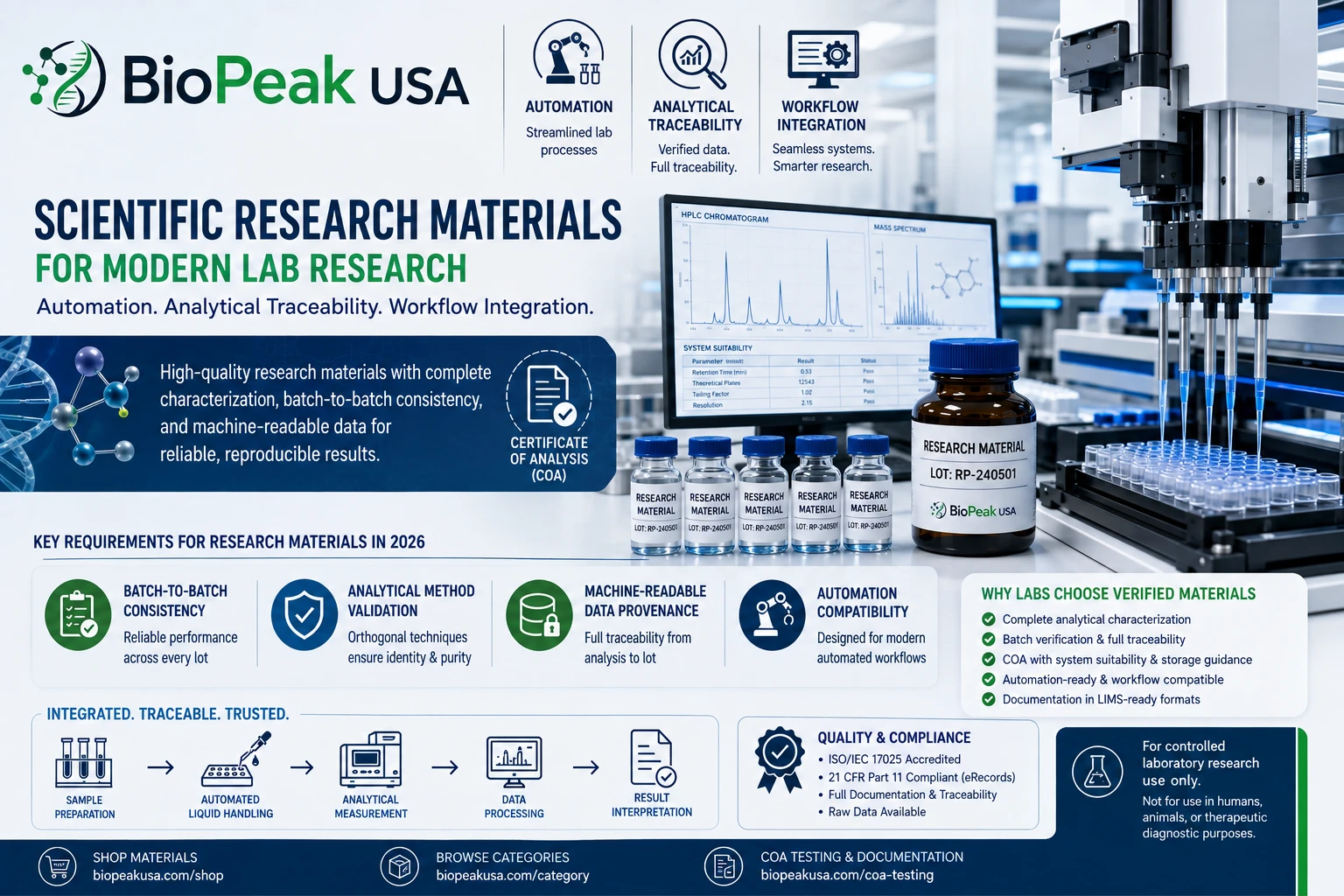
Automation, analytical traceability and workflow integration characterise lab research in 2026. The term ‘Scientific Research Materials’ covers controlled and standardised substances used in in-vitro and cell-based studies. These materials must be consistent batch-to-batch and have all analytical methods automated and verified. This report reviews the current status of research materials selection and use in modern lab research.
Current Definition of Research Materials in Lab Research
In this report, research materials comprise substances used in controlled lab-based studies, and are not intended for use in biological systems. A laboratory reagent must be confirmed by at least one orthogonal analytical technique and assessed for purity by chromatography. It must state the physical form of the reagent and be stable under defined storage conditions. Batch specific documentation must correlate analysis and the lot number. These considerations must be defined prior to any sale of scientific research materials to a lab.
Trends in Lab Workflows for 2026 and Required Materials
Sample prep, liquid handling, imaging, and data collection in labs are successfully integrated into automatic processes. Automated processes are reliable and predictable by the reliable physical properties of the samples and reagents used. Some problems that complicate the incorporation of these materials are automation-ready pipetting, the stability of the material under computer-controlled processes, and the availability of documentation from the supplier in a directly importable format into a Lab Information Management System (LIMS). In assessing the materials an evaluation of purity statements is no longer sufficient. They now consider the behavior of materials in automated systems.
Analytical Characterization and Quality Documentation of Laboratory Materials
In 2026, all reagents were tested to determine their identity and purity. Purity is assessed by chromatography, while identification is also done through the peak area percentage. Mass data from the mass spectrometer and retention time cross data from chromatography also provide identification. The complimentary analytical technique used will depend on the compound class and the particular testing method. For all materials used in research, cumulative batch data are prepared. The Certificate of Analysis includes purity data, system suitability, and recommendations for storage of the batch. Verified analytical reports such as COA testing details ensure these parameters meet standard laboratory requirements.
Batch Verification and Traceability of Laboratory Reagents
Batch verification correlates analysis findings with a defined production lot. Laboratories performing batch verification are prepared to provide clear and legible account records that differentiate experiments from one another. Traceability is the ability to connect each reported measurement to the specific lot, the instrument calibration, and the reference standard used. Researchers can, on a batch basis, determine if observed discrepancies in experimental studies can be causally linked to material. For research materials, traceability is critical, especially considering laboratory workflow sophistication.
Analytical Reference Standards and Their Relationship to Test Materials
Analytical Reference Standards (ARS) are materials utilized in accepted analytical procedures for comparative purposes. Unlike test materials, ARS perform a variety of functions. Characterization of reference materials, when needed for working standards, must be carried out in the laboratory. To ensure the highest quality of comparison, reference materials must be characterized by a metrological institute. The choice of a reference standard is dictated by the requirements of the analytical method and the laboratory quality assurance. In most cases, research materials are test materials, while reference standards play a role in their determination or identification.
Use of laboratory materials in Automated Systems
Laboratory materials enable sample preparation, measurement, data processing, and result interpretation within a single system. These materials support task automation. Characterization and stability across multiple solvents, temperatures, and humidity are essential. Stability ensures consistency across experiments and between lots. Suppliers must provide raw analytical data for their materials. Trusted sources provide a baseline quality assurance.
Shortening with AI
Question about Scientific Research Materials
Q: What is the difference between scientific research materials and analytical reference standards?
A: Scientific research materials are the test substances in the experimental system. Analytical reference standards are the test substances in the analysis system that provide reference for measurement and identification. Reference standards are usually pure and certified. The laboratory materials used in the experiment are selected based on their characteristics and application.
Q: Why at least among many other measurements, is HPLC purity data considered one of the fewer measurements?
A: HPLC data provides relative percentages for peak areas of a substance comprising a sample. HPLC only provides relative data for peak areas and cannot identify all the components in a sample. For scientific research materials, complementary analytical methods are necessary for the complete sample characterization.
Q: What is the significance of batch verification for lab materials?
A: Batch verification related a lot of material with associated data as the definition of scientific research material. This also provides the researcher with an understanding of the role the material plays relative to the other variables in the research.
Q: What do laboratories evaluate when assessing research materials?
A: Laboratories consider the identity of components, purity levels, available quality control data along with associated batch records, storage requirements, and the proposed use case and compatibility with existing lab workflows. Labs browsing catalog options often review specified laboratory supplies categories to evaluate available batch grades.
Documentation and quality standards
ISO/IEC 17025 accredited laboratories have documented procedures for receipt, storage, and use of reagents. US laboratories comply with 21 CFR Part 11 as applicable relating to electronic records. Suppliers that provide data in open, non-proprietary formats allow direct inclusion into the laboratory quality system. For scientific research materials, this documentation maintains the integrity of all characterization data for the duration of the research.
Conclusion
The automation and data documentation requirements of modern laboratories mean that scientific research materials are essential to today’s laboratories. By 2026 it is expected that the evaluation of scientific research materials will require proven orthogonal analytical methods for the demonstration of identity, batch-specific purity and composition, automation, and a documentation chain with traceability infrastructure for analysis and the associated lot.
Laboratories consider these materials in the context of their overall analytical workflow, completeness of documents, and homogeneity of production batches. When procuring verified items, researchers can shop BioPeakUSA materials or explore their full product BioPeakUSA category directory to match exact experimental standards. Suppliers of scientific research materials that provide full characterization and automation traceability support laboratory operations and records.
All materials described are for controlled laboratory research use only and not for any other purpose.