Peptide Synthesis in Modern Laboratory Research
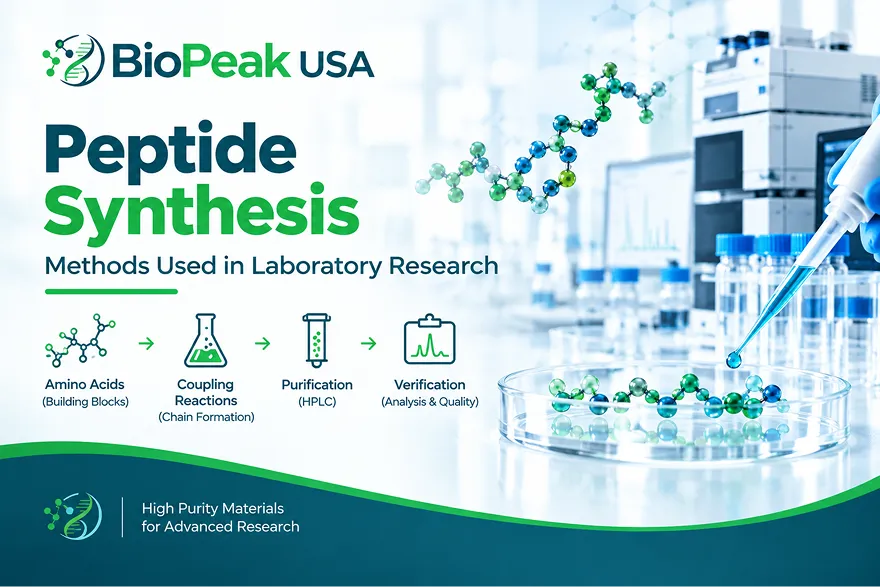
A guide to peptide synthesis, covering solid-phase and solution-phase methods, reagents, purification, characterization, and custom manufacturing for laboratory research.

A guide to peptide synthesis, covering solid-phase and solution-phase methods, reagents, purification, characterization, and custom manufacturing for laboratory research.
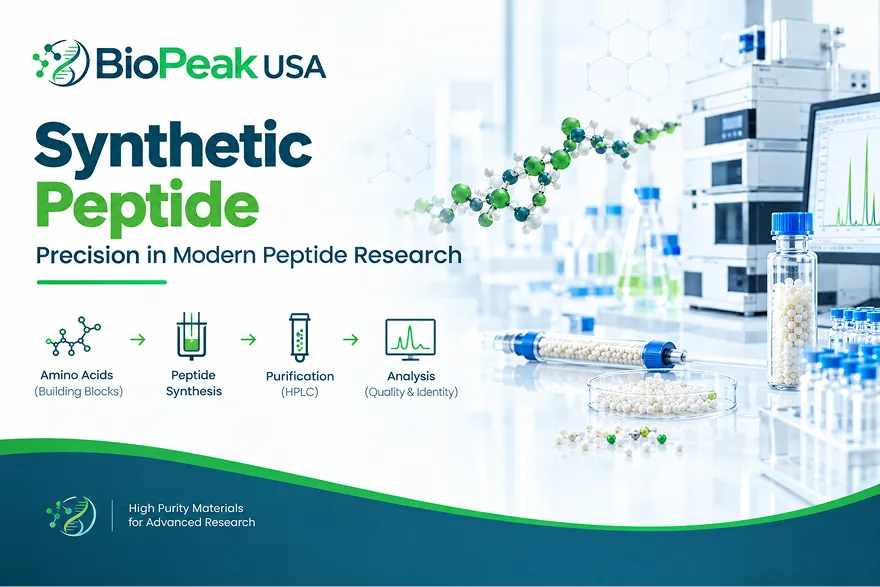
Explore synthetic peptide synthesis from amino acid sequencing and purification to HPLC and mass spectrometry characterization, libraries, and research documentation.
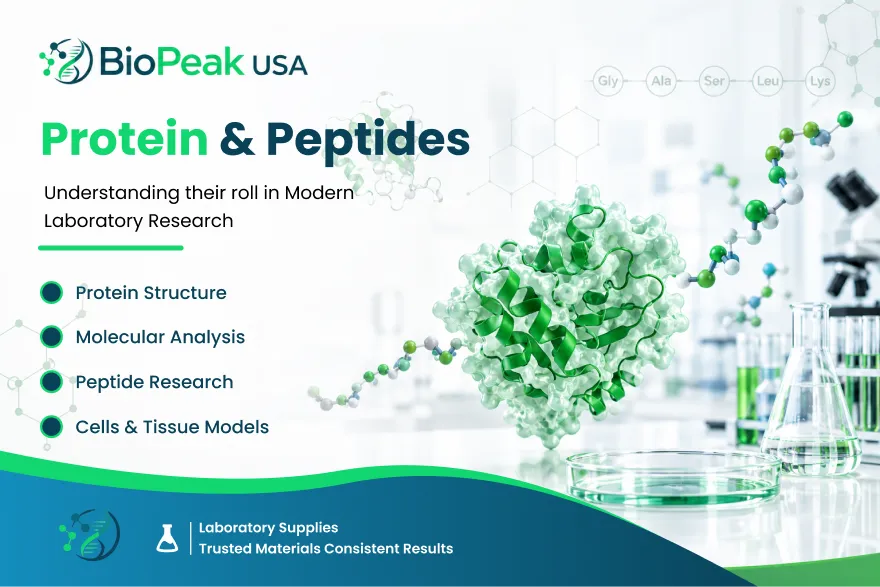
Explore how amino acids form polypeptide chains and how peptides differ from proteins, including their structure, research applications, and laboratory analysis.

Explore how research-grade peptides are studied through sequence, structure, molecular interactions, cellular signaling, analytical testing, and batch traceability.
Researchers should verify peptide identity, purity, stability, controls, storage, and batch traceability, while BioPeak USA provides RUO materials and documentation.
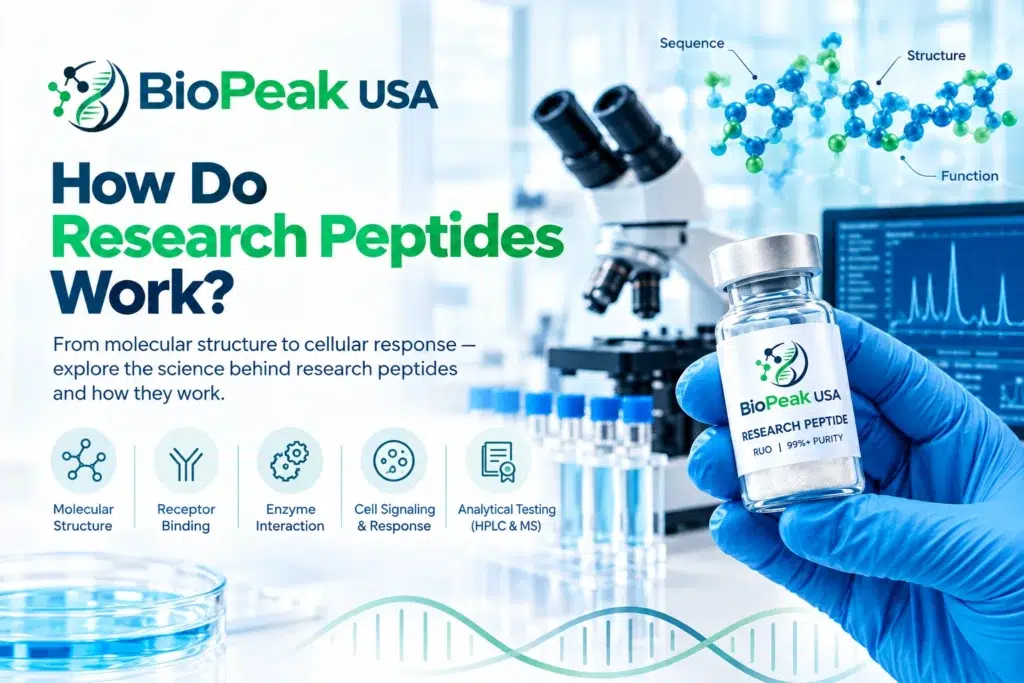
Research peptides work through receptor binding, enzyme interactions, and cell signaling, with purity, identity, stability, and batch documentation supporting reliable research.
Quantitative data helps researchers measure, analyze, and interpret numerical observations while supporting data quality, traceability, statistical accuracy, and reproducibility.

Experimental design helps researchers plan variables, controls, sampling, replication, measurements, and analysis to produce reliable, reproducible scientific evidence.

Preclinical research uses controlled models, analytical methods, appropriate controls, and documented materials to generate reproducible evidence before clinical investigation.

Research reagents support cellular health studies through controlled assays, analytical characterization, batch traceability, HPLC testing, COAs, and documented RUO materials.