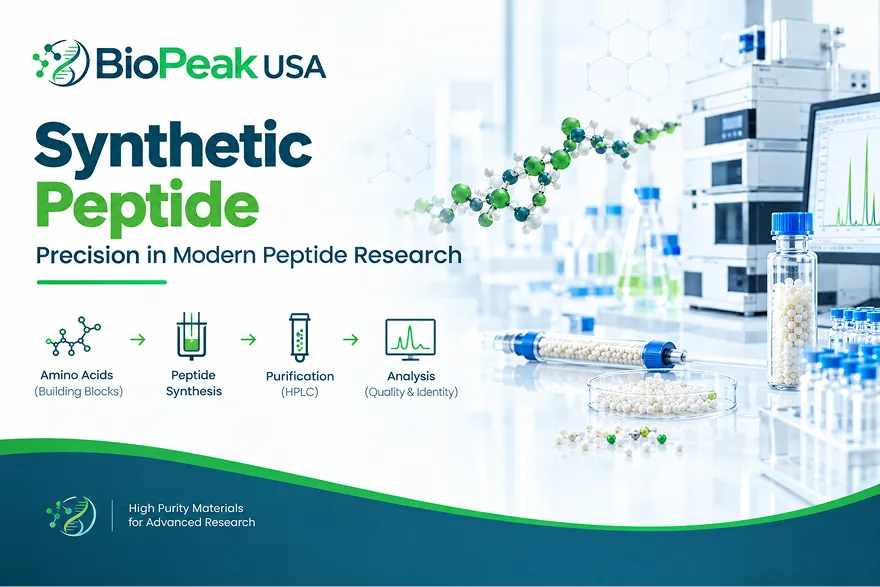
Research reagents support cellular health studies through controlled assays, analytical characterization, batch traceability, HPLC testing, COAs, and documented RUO materials.
How Research Reagents Support Cellular Health Studies
Introduction
The focus is on the measurable characteristics of cells, their biochemistry, cellular metabolism, cellular redox state, and cell structural responses. This is when dealing with the health of cells within the context of the modern day lab. The health of cells is studied by researchers using characterized biochemical molecules, analytical materials, and defined experimental models to study particular endpoints. Research is reliable only when lab processes are consistent and when experimental protocols are adequate, methods are validated, and materials are completely characterized. In this paper, the different steps taken by laboratories to assess research materials used in cell health studies including, among others, HPLC, C of A, batch, analytical characterization, and RUO, are discussed.
Key Reagents for Cellular Health Analysis
Biochemical reagents constitute a substantial part of cellular health research workflow. In line with the intended outcome of the experiment, the researchers may study signaling research compounds, copper containing peptide complexes, redox related materials, and research using only materials among others. These materials may be used to study cell signaling, extracellular matrix related research Compounds, oxidative stress, metabolism and other defined endpoints in a controlled environment. In such studies, the identity of materials, specifications, batch, storage, and compatibility with the model employed in the experimental study are critical factors to consider.
BPC-157 Initial Signaling Studies
BPC-157 can be studied in molecular pathways and cell signaling, and used in various lab studies. BPC-157 can be assessed as research material when a lab requests a material they can work with in a controlled manner. How the material will be analyzed and used will determine how it can be researched. The relevant applications will rely on the experimental setup, the model applied, the analysis, and the specified material.
GHK-Cu and Structural Research
GHK-Cu is a lab research material used for structural research and cell signaling. The research can evaluate cellular matrix adhesion, collagen research, matrix processes, and other established experimental endpoints. The research can be applied in controlled cellular models and to assess structural characteristics. The material should be evaluated based on the research requirements, the validation provided, and the research aim.
Glutathione in Oxidative Research
Glutathione is extensively researched in lab studies involving oxidative and redox biology. Lab studies can investigate the effects of controlled oxidative oxidation and evaluate the cellular impact. Glutathione can be used as research material when a lab investigates defined cellular health measurements. The interpretation of the research should depend on the selected model, controls, analysis, and study design.
Quality Assurance for Cellular Health Studies
For all cell-based research, the characterization and documentation of lab materials is critical. There are numerous variations that can impact the identity of a material, its purity, storage conditions, or the characteristics of a batch. Thus, when selecting lab materials, researchers must consider analytical specifications, testing, Certificates of Analysis, storage, and batch traceability. These records help the laboratory provide consistent documentation throughout the various steps of an experiment.
HPLC-Verified Purity
High-Performance Liquid Chromatography (HPLC) is a technique used to analyze and characterize samples. When a material specification states that purity is HPLC verified, purity is defined by the documentation and the analytical method. In cellular health research, analytical information allows definition of the material incorporated into the designed experimental system. HPLC information, along with other analyses, should not be the only criteria for determining the suitability of an experiment.
Certificate of Analysis
A Certificate of Analysis (COA) contains documentation of a specific batch of material. Depending on the material and the analytical methodology, a COA can include the identity of the material, purity, analytical data, batch number, and information on storage and other pertinent details. Documentation of batches can help laboratory recordkeeping and allows researchers to connect research materials to specific batches when conducting cellular health studies.
GMP-Compliant Manufacturing
GMP-Compliant manufacturing is the application of validated and documented quality procedures and controlled processes to manufacturing. GMP-related documents can provide more information on the manufacturing controls and quality procedures; however, GMP status does not imply that the product is safe for human or veterinary use or that it has a particular biological activity in the laboratory model.
Preclinical Models and Cellular Health
Cellular health research also encompasses controlled experimental models and standard monolayer cell assays. Researchers can use these models to examine the defined characteristics of cells. A variety of factors may influence the outcome of these models including cell type, culture conditions, research material, type of assay, control, and study design.
NAD+ and Bioenergetics Research
NAD+ is studied in the context of cellular metabolism, redox biology, and energy-related biochemical pathways. Studies involving NAD+ and other research related materials can be conducted to evaluate NAD+ based measurements, cell responses, and biochemical markers in specific models. NMN will also be studied in NAD+ related research pathways. These studies will not define veterinary or human outcomes, but will define outcomes within controlled research conditions.
Redox Regulation
Redox regulation is essential to cellular health research as laboratories can analyze changes in biochemical systems involved in oxidation and reduction. Glutathione-based colorimetric and fluorometric assays are available for measuring redox markers in a controlled model. Researchers can use these assays to measure cellular responses under hypoxic conditions, variable nutrient conditions, and stressed oxidation conditions.
Documentation, Traceability, and Analytical Characterization
Documentation and Batch Traceability
Batch traceability links laboratory materials to defined production batches and relevant documentation. For case studies, laboratory records can identify the materials being examined in the experiment. Depending on the product, supporting documentation may include HPLC analysis, mass spectrometry, batch identification, purity as reported, and other relevant analytical data. Maintaining such records allows a laboratory to better organize and interpret experimental data.
Analytical Characterization
Analytical characterization refers to the materials used in a laboratory study. HPLC can provide chromatographic characterization, while mass spectrometry provides complementary molecular characterization. Determining the appropriate analytical technique for the material and the task is essential. With documented analytical information and proper experimental controls, researchers can definitively characterize the materials and maintain adequate records for use in cellular health research.
Frequently Asked Questions About Cellular Health
Q: What distinguishes research-grade Compounds in cellular health studies?
A: In cellular health studies, the materials used are characterized and documented according to specifications and definitions. Researchers consider identity, reported purity, analytical data, batch, storage, and the intended purpose when selecting research compounds to be used for controlled work.
Q: Why is HPLC verification relevant to cellular health research?
A: HPLC is used to determine the chromatographic definition of a material and report purity in accordance with a defined analytical method. For cellular health research, this type of information is useful to researchers to definitively characterize the material within a controlled experimental system.
Q: What is the importance of BPC-157 in in vitro cellular studies?
A: BPC-157 is studied in cellular signal transduction pathways and associated molecular processes in laboratory models. Researchers can study cells’ controlled responses in defined in vitro models in line with their experimental and analytical objectives.
Q: How is GHK-Cu studied in cellular research?
A: GHK-Cu is studied in laboratory models of fibroblasts, extracellular matrix integration, cellular adhesion, and related research endpoints. The use of GHK-Cu depends heavily on the specifics of the experimental model, the question being asked, the available analytical methods, and the reported Material Specifications.
Q: Why is glutathione studied in cellular health research?
A: Glutathione is studied in redox research and biology. Glutathione can be used in a variety of oxidative stress research models in which response pathways and other redox-related endpoints can be studied under controlled conditions.
Q: What supports the research materials used in cellular health studies?
A: Depending on the material, documentation may include a Certificate of Analysis, batch identification, reported purity, HPLC data, mass specification data, storage requirements, and related data. Researchers can keep records and retain the integrity of their materials for the duration of the research.
Research Use Only and Scientific Transparency
The information provided is intended to distinguish research uses of laboratory materials from those used for human and veterinary applications. Research materials should be examined by considering the stated specifications, analytical data, storage requirements, and the intended laboratory application. References to cellular responses, signaling, redox, or metabolic processes must be interpreted as an informative, scientifically based extent of research. They must not be construed to suggest therapeutic, diagnostic, or clinical efficacy.
Conclusion
Studies on cellular health include controlled studies on cell signaling, metabolic studies, structural studies, redox biology studies, and some measurable endpoints. Characterized research materials that include BPC-157, GHK-Cu, glutathione, NAD-related materials, and other biochemical reagents can be used in appropriate cellular-based assays. HPLC analysis and mass spectrometry, along with a Certificate of Analysis and providing batch numbers along with lot identification and traceability, can assist in laboratory record keeping and material characterization. Clear defined specifications, controls, analytical transparency, and Research Use Only (RUO) applications enable laboratories to develop controlled cellular health research assays.
Disclaimer: The products and materials discussed are intended for in vitro controlled lab-based research. They are not intended for consumption, use on animals, therapeutic use, human or veterinary drug use, treating, or curing any conditions.